


Microscopes for electronics and soldering
Microscopes for soldering, PCB inspection, watch and phone repair, and other close work on a bench. The two things that matter here are working distance, meaning the room between the lens and the board for an iron and tweezers, and a stable stand. Our current picks are the Levenhuk DTX 500 LCD, a digital microscope with a 3.5-inch screen, 150 mm of focus travel and measurement software, and the Levenhuk DTX 350 LCD, with a larger 4.3-inch screen and a 7-hour battery.
Free UK delivery on orders over £100, delivery charge shown at checkout
-
Levenhuk DTX 500 LCD Digital Microscope
Regular price £227.95Regular price -
Levenhuk DTX 350 LCD Digital Microscope
Regular price £151.95Regular price -
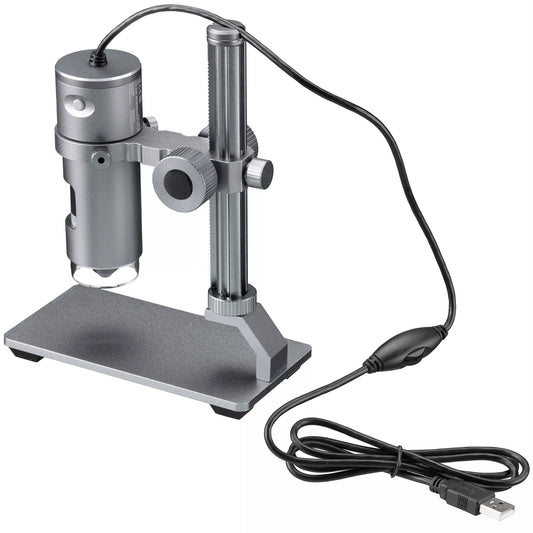
Bresser DST-1028 USB Digital Microscope
Regular price £147.95Regular price -
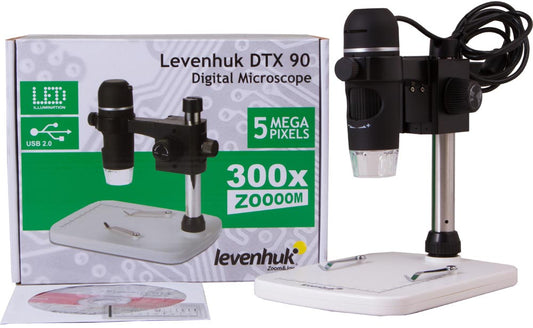
Levenhuk DTX 90 USB Microscope
Regular price £126.95Regular price -
Levenhuk DTX 700 LCD Digital Microscope
Regular price £278.95Regular price -
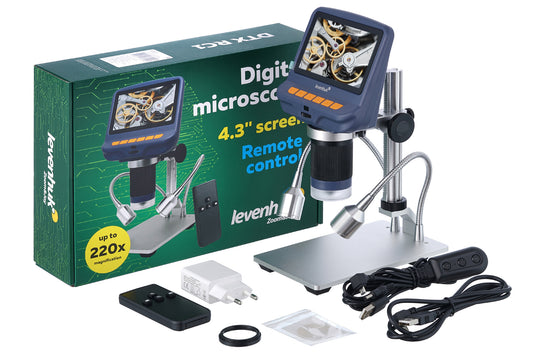
Levenhuk DTX RC1 Remote Controlled Digital Microscope
Regular price £151.95Regular price





Stereo or digital for soldering
A stereo microscope gives you depth perception, which makes placing a component and judging a solder joint easier, and a boom-stand version swings out over a large board. A digital microscope with a screen lets you sit upright rather than hunched over eyepieces, records your work, and costs less for the same magnification. For occasional repairs and hobby electronics, the digital route is the easier one to live with. For daily SMD work, a stereo microscope on a boom stand is the professional choice, and we'll stock one as the range grows.
What to look for
Ten to forty times magnification covers almost all electronics work; anything higher shows you a single pad and nothing around it. Look for at least 100 mm of working distance, lighting you can dim so solder joints don't glare, and a stage or base wide enough for the boards you repair.
Electronics microscope FAQs
What magnification do I need for soldering?
Around 10x to 20x for placing components and 30x to 40x for checking joints. The DTX models start at 20x, which suits inspection; for the lower end a stereo microscope is better.
Can I use the microscope and a soldering iron at the same time?
Yes, if the working distance allows it. The DTX 500's 150 mm focus range gives room for an iron tip under the lens; the DTX 350's 80 mm is tighter but workable for tweezers and inspection.
Not quite right?


