


Microscopes for kids and home education
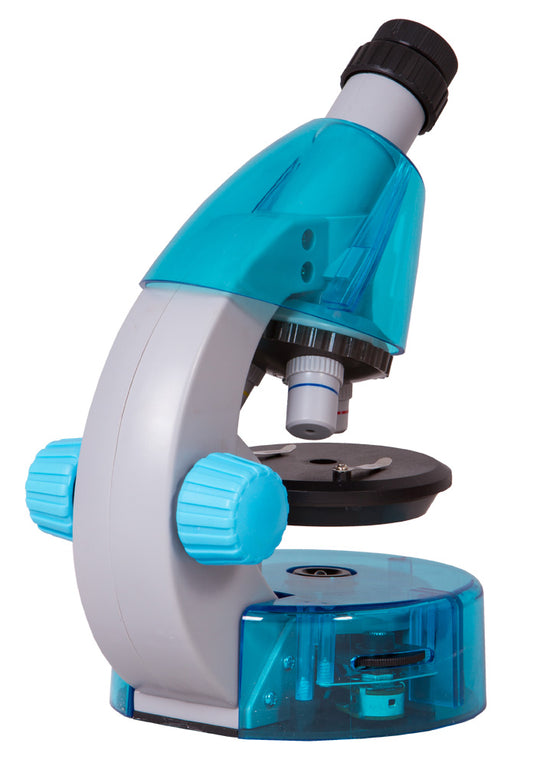
Microscopes for children, home education and schools, chosen because they have real glass or optical-grade lenses, a stage you can actually focus, and something to look at in the box. A toy microscope with a plastic lens and a 1200x sticker is the quickest way to put a child off the subject, and nothing here is one. The range starts with the Levenhuk LabZZ M101 for ages five to nine, moves up to the Levenhuk Rainbow 2L for older children and family use, and tops out with the metal-bodied Levenhuk Rainbow 50L PLUS for secondary school science. Each of those three comes with Levenhuk's K50 experiment kit, which has five prepared slides, blank slides, tools and a brine shrimp hatchery.
Free UK delivery on orders over £100, delivery charge shown at checkout
-
Levenhuk LabZZ M101 Microscope
Regular price £42.95Regular price -
Levenhuk Rainbow 2L Microscope
Regular price £75.95Regular price -
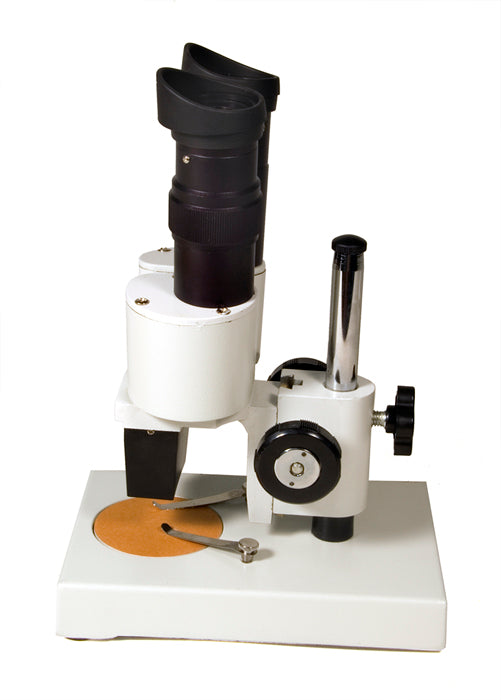
Levenhuk 2ST Stereo Microscope
Regular price £122.95Regular price -
Levenhuk Rainbow 50L PLUS Microscope
Regular price £168.95Regular price -
Levenhuk Rainbow 2L PLUS Microscope
Regular price £101.95Regular price -
Levenhuk Rainbow 50L Microscope
Regular price £143.95Regular price -
Bresser Junior 40-640x Microscope
Regular price £37.95Regular price -
Bresser Junior Biolux SEL 40-1600x Microscope
Regular price £84.95Regular price -
Levenhuk Rainbow D2L Digital Microscope
Regular price £151.95Regular price -
Levenhuk LabZZ M4 Stereo Microscope
Regular price £59.95Regular price -
Levenhuk 1ST Stereo Microscope
Regular price £54.95Regular price -
Levenhuk Rainbow DM500 LCD Digital Microscope
Regular price £151.95Regular price -
Bresser Biolux NV 20-1280x Microscope with HD Camera
Regular price £147.95Regular price -
Bresser Erudit ICD Stereo Microscope
Regular price £172.95Regular price -
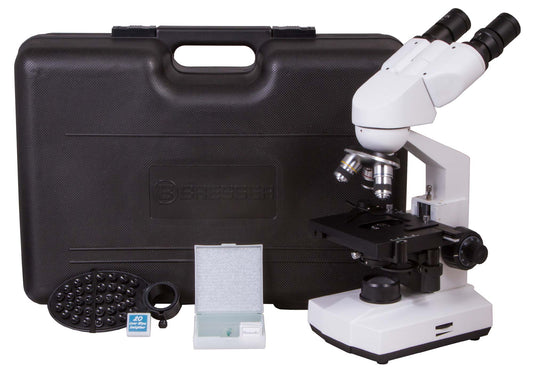
Bresser Erudit Basic 40-400x Binocular Microscope
Regular price £227.95Regular price -
Levenhuk N20 NG Prepared Slides Set
Regular price £22.95Regular price20 prepared slides, plus blanks and cover slips
-
Levenhuk N80 NG Prepared Slides Set
Regular price £92.95Regular price80 prepared slides with an illustrated guide
-
Levenhuk K50 Experiment Kit
Regular price £22.95Regular priceExperiment kit with 5 specimens, tools and a guide
-
Levenhuk N38 NG Prepared Slides Set
Regular price £46.95Regular price38 prepared slides, plus blanks and cover slips
-
Levenhuk LabZZ CP24 Prepared Slides Set
Regular price £16.95Regular price24 prepared slides for children, six themes







Which type suits which age
Under eight, the fine motor control needed to focus a compound microscope on a slide is a stretch, and a lot of children get more from a stereo microscope where they can drop a beetle or a leaf on the stage and see it in 3D straight away. From about eight, a monocular compound microscope with a built-in light works well, and the prepared slides in the kit carry them through the first few weeks. From eleven, when school biology starts asking for drawings of cells, the Rainbow 50L PLUS's sharper lenses and metal body earn their place. A digital microscope with a screen is the easiest for a group, because everyone sees the same image at once.
What to check before you buy
Lighting from both above and below means the microscope can show solid objects as well as slides, which matters for a child who wants to look at everything. A mains adapter saves a fortune in AA batteries. A 45-degree eyepiece is far more comfortable than a vertical one for a small person. And the box should contain prepared slides, because a microscope with nothing to look at goes in a cupboard.
Our picks by budget
Under £50, the LabZZ M101, a real microscope with a lower LED light and the K50 kit, but battery-only and plastic-bodied. Under £100, the Rainbow 2L, which adds upper lighting, a mains adapter and a glass condenser and is the one we'd buy for most families. Between £100 and £200, the Rainbow 50L PLUS, with achromatic lenses, a rotating head and a carry case. Our kids' microscope guide compares the three in detail and lists things to look at in the first week.
For schools and home education groups
If you're buying for a school, a home education group or a club, email us with the model and quantity and we'll quote for several units. Our how to use a microscope guide is written to be printed and handed out.
Kids' microscope FAQs
What age is a microscope suitable for?
From about five with help, and independently from about eight. The LabZZ M101 is built for the younger end; the Rainbow models suit eight and up and will still be in use at GCSE.
Is a digital microscope better for a child?
It's easier to share and there's no eyepiece to line up, which suits younger children and groups. It can't look at slides properly, though, so for school biology a compound microscope is still the right tool.
What can we look at straight away?
The five prepared slides in the K50 kit, then onion skin, a hair, salt and sugar crystals, pond water and a drop of yoghurt. The prepared slide sets add twenty more specimens for around £25.
Not quite right?


