


Stereo microscopes
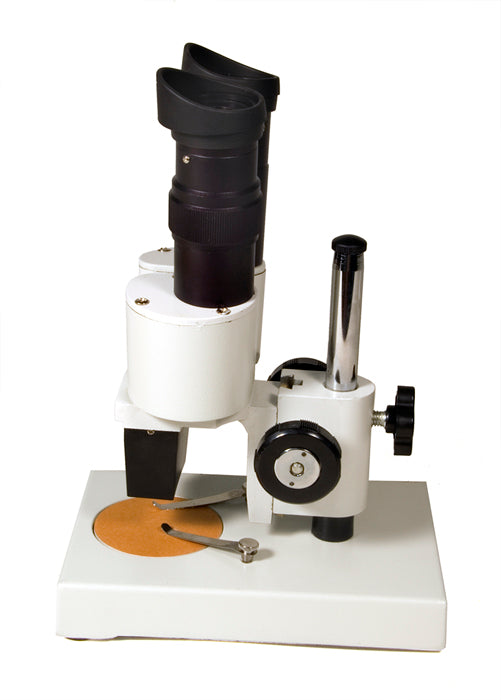
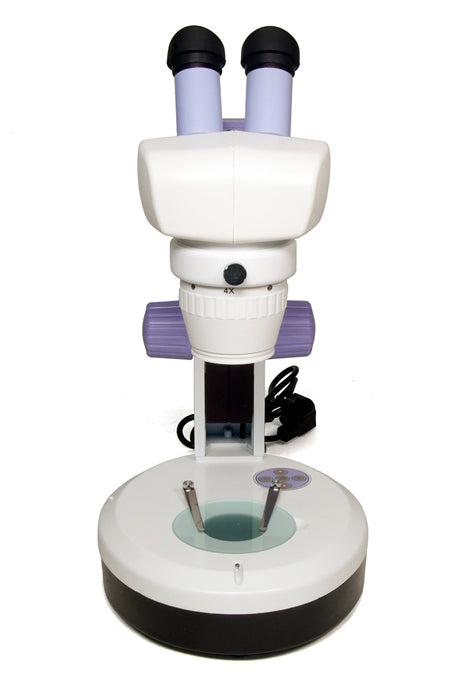
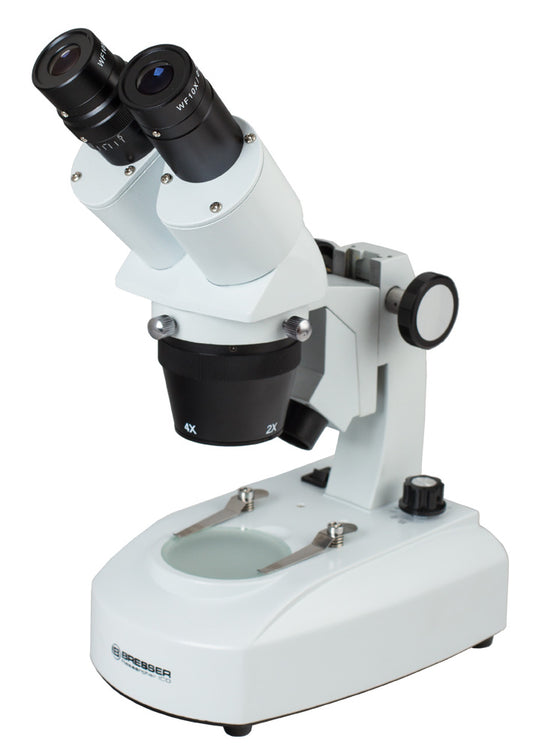
Stereo microscopes give you a magnified, three-dimensional view of solid objects at low power, usually between 10x and 40x. They're the microscopes for insects, flowers and seeds, coins and stamps, rocks and minerals, and circuit boards, and they need no slide preparation at all. You put the object on the stage and look. Our stereo range is built on Levenhuk's ST series: the Levenhuk 2ST, a 40x binocular model with a metal body, and the Levenhuk 5ST, which adds LED light above and below and 160 mm of working distance.
Free UK delivery on orders over £100, delivery charge shown at checkout
-
Levenhuk 2ST Stereo Microscope
Regular price £122.95Regular price -
Levenhuk 5ST Stereo Microscope
Regular price £227.95Regular price -
Bresser Erudit ICD Stereo Microscope
Regular price £172.95Regular price -
Bresser Researcher ICD LED 20-80x Stereo Microscope
Regular price £227.95Regular price -
Levenhuk LabZZ M4 Stereo Microscope
Regular price £59.95Regular price -
Levenhuk 1ST Stereo Microscope
Regular price £54.95Regular price






What a stereo microscope is for
A stereo microscope (sometimes called a dissecting microscope or a stereoscopic microscope) has two separate light paths, one for each eye, so you see depth as well as detail. That's what makes it useful for anything you want to handle while you look, from pinning a beetle to soldering a component. The working distance, meaning the gap between the lens and the object, is 60 mm on the 2ST, which leaves room for tweezers and fingers, and 160 mm on the 5ST, which takes bulky objects such as rocks and watches.
What magnification you actually need
Far less than you'd think. Most entomology, coin and electronics work happens between 10x and 30x, and 40x is already close for a whole insect. Zoom stereo microscopes and models with a camera port (a trinocular head) exist for people who need to step through magnifications or record what they see, and we'll add them as the range grows. Our types guide explains the difference between a stereo and a compound microscope if you're not sure which you need.
Lighting
Some stereo microscopes, including the 2ST, have no built-in light and rely on daylight or a desk lamp. That keeps the price down and works well for occasional use. If you'll use it every evening, a model with built-in lighting saves fiddling with lamps; the 5ST has LED lights above and below the stage with adjustable brightness.
Stereo microscope FAQs
Can I see cells with a stereo microscope?
No. Cells need 100x and above with light passing through a thin slide, which is a compound microscope's job. A stereo microscope is for the surface of solid things.
Is a stereo microscope good for soldering?
Yes, and many repair benches use one. The 3D view and the working distance are the two things that matter. Our electronics collection gathers the models that suit a bench.
Binocular or trinocular?
Binocular means two eyepieces for comfortable viewing. Trinocular adds a third tube for a camera, which you only need if you plan to photograph or film regularly.
Not quite right?


