


Compound microscopes
Compound microscopes are the high-power design for thin samples on glass slides, which is what you need for cells, pond life, blood, plant sections and the prepared slides every school biology course uses. They're also called light microscopes or biological microscopes. Ours run from 40x up to 1280x and come with an experiment kit in the box, so you can start the day it arrives. The current range is the Levenhuk LabZZ M101 for younger children, the Levenhuk Rainbow 2L as a first proper microscope, and the metal-bodied Levenhuk Rainbow 50L PLUS.
Free UK delivery on orders over £100, delivery charge shown at checkout
-
Levenhuk Rainbow 2L Microscope
Regular price £75.95Regular price -
Levenhuk Rainbow 50L PLUS Microscope
Regular price £168.95Regular price -
Levenhuk LabZZ M101 Microscope
Regular price £42.95Regular price -
Levenhuk Rainbow 2L PLUS Microscope
Regular price £101.95Regular price -
Levenhuk Rainbow 50L Microscope
Regular price £143.95Regular price -
Bresser Junior 40-640x Microscope
Regular price £37.95Regular price -
Bresser Junior Biolux SEL 40-1600x Microscope
Regular price £84.95Regular price -
Bresser Biolux NV 20-1280x Microscope with HD Camera
Regular price £147.95Regular price -
Bresser Erudit Basic 40-400x Binocular Microscope
Regular price £227.95Regular price -
Bresser Erudit DLX 40-1000x Microscope
Regular price £236.95Regular price -
Bresser Researcher Bino 40-1000x Microscope
Regular price £337.95Regular price -
Levenhuk Rainbow D2L Digital Microscope
Regular price £151.95Regular price


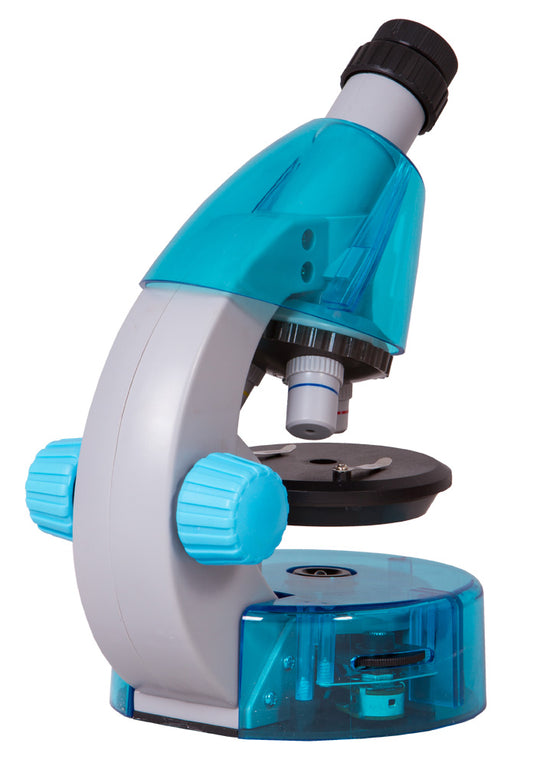


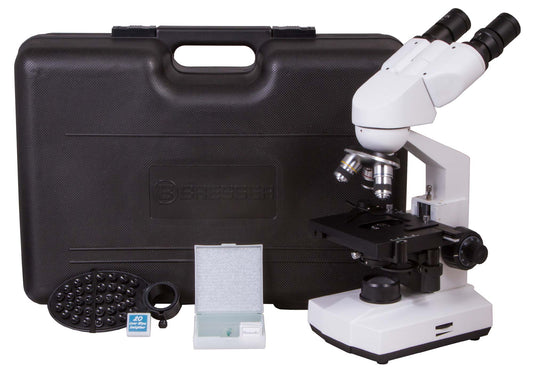


How a compound microscope works
Light comes up from below the stage, passes through the sample and into one of three objective lenses on a rotating turret, then up through the eyepiece. Total magnification is the eyepiece multiplied by the objective, so a 10x eyepiece and a 40x objective give 400x. Because the light has to pass through the sample, the sample needs to be thin and on a slide, which is why compound microscopes are sold with slides, cover slips and often a set of prepared specimens.
Monocular, binocular or trinocular
A monocular head has one eyepiece and is lighter, cheaper and fine for children and occasional use. A binocular head has two and is more comfortable for long sessions, which is what adult hobbyists and schools tend to prefer. A trinocular head adds a camera port. Our launch range is monocular; binocular and trinocular models follow, and you'll be able to filter by head type here when they arrive. The types guide covers the choice in more detail.
Reading the magnification
Above about 400x the limiting factor is the quality of the lenses, not the number. A 1000x setting on a beginner's microscope is mainly useful for bragging rights, and the detail you can resolve is set by the objective. Achromatic objectives, which the Rainbow 50L PLUS has, correct the colour fringing you get on cheaper lenses. Our magnification guide explains all of this with examples.
Which model for whom
For a child under ten, the LabZZ M101 at under £50. For a first real microscope for home education or an adult beginner, the Rainbow 2L, with light from above and below and a mains adapter, for under £100. For GCSE and A-level work, or a hobbyist who wants a metal body and better lenses, the Rainbow 50L PLUS in the £100 to £200 bracket.
Compound microscope FAQs
What's the difference between a compound and a light microscope?
Nothing, in everyday use. "Light microscope" is the school textbook term for the same instrument, as opposed to an electron microscope.
Do I need slides?
Yes. Our compound microscopes include a starter kit with five prepared specimens and five blank slides, and the slides collection has larger prepared sets when you want more.
Can I use it for coins or insects?
Only a small part of them. For whole objects in 3D you want a stereo microscope.
Not quite right?


